Blog Archives
When a Good Idea Doesn’t Age Well
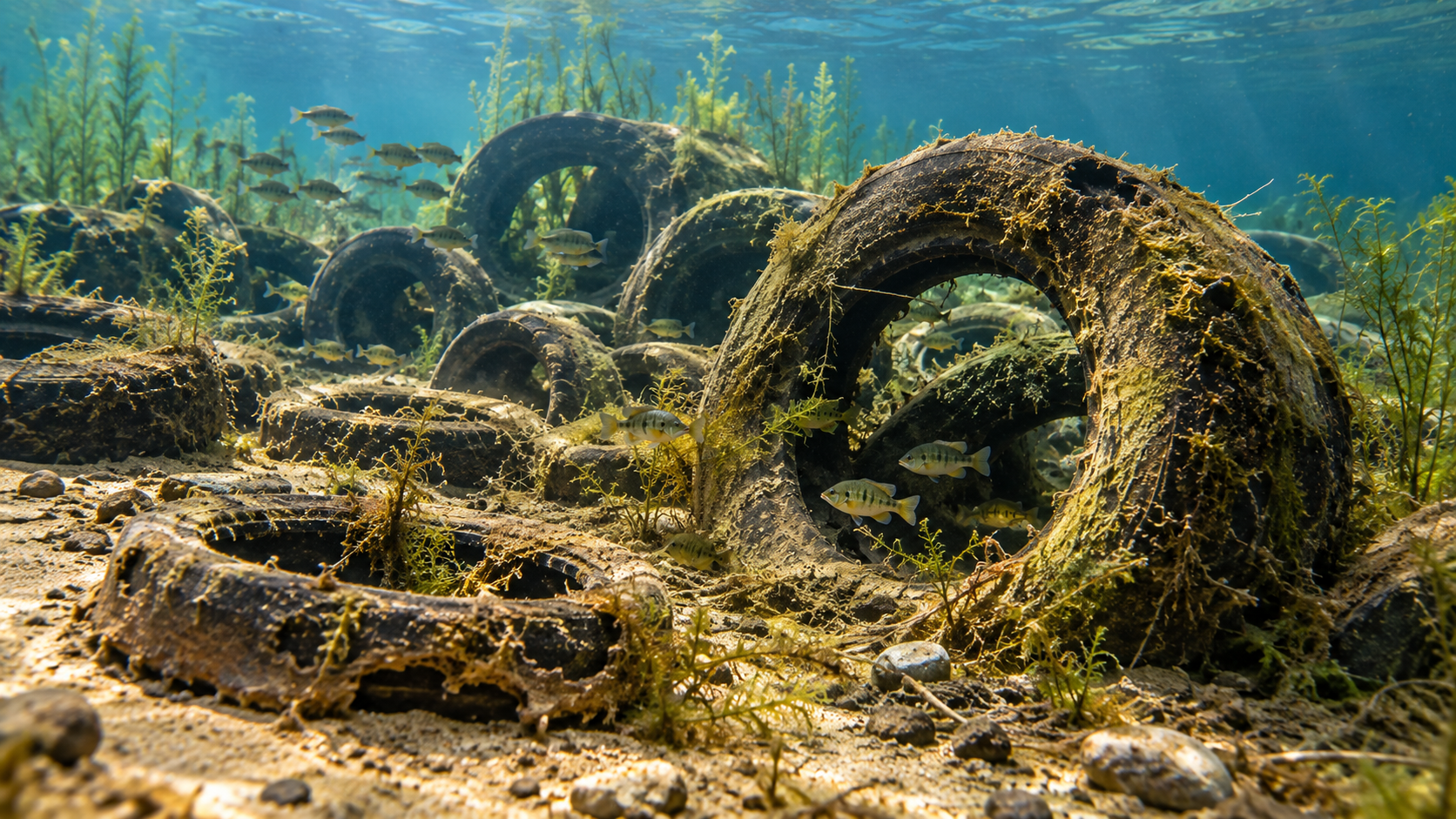
More than 30 years ago, researchers placed discarded automobile tires in concrete-lined canals in California and Arizona to create habitat for fish and other aquatic organisms. At the time, the results were impressive. Areas containing the tire reefs supported three times as many aquatic invertebrates and 20 times as many fish as typical sections of the canals. Reusing discarded tires while restoring lost habitat seemed like a pretty good idea.
Even then, researchers questioned whether chemicals could leach from the tires. Today, we know considerably more about the chemicals, metals and tiny particles that can enter aquatic environments as tires deteriorate. We’ve also seen what happened to some artificial tire reefs over time, with tires breaking loose and becoming debris rather than permanent habitat.
It raises an interesting question: How differently would we approach the same project today? The full story goes beyond tires and shows how advances in science can change the way we think about aquatic herbicides, environmental management and even solutions that once appeared environmentally beneficial.
New Research Raises Questions About Milfoil Management
Eurasian watermilfoil remains one of the most challenging invasive aquatic plants facing lake managers today. While a variety of control methods are available, herbicide treatments continue to be a widely used tool for managing large infestations.
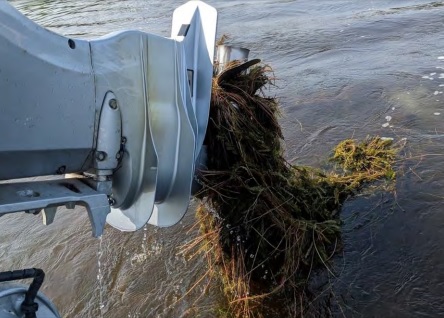
Recent research from Lake George, New York, has added a new dimension to the conversation. Scientists studying a ProcellaCOR treatment found evidence of herbicide compounds persisting in lake sediments months after application, raising questions about long-term environmental impacts and sediment interactions.
As lake associations and resource managers evaluate the best approaches for invasive plant control, understanding both the benefits and potential tradeoffs of available management tools is becoming increasingly important.
We’ve taken a closer look at the study findings, what they mean for lake managers, and how they fit into broader Eurasian watermilfoil management strategies.
Strategic Aquatic Plant Harvesting as a Multi-faceted In-Lake Management Tool
Research on Kohlman Lake in Minnesota shows how mechanical aquatic plant harvesting can play a vital role in improving water quality and supporting balanced lake management.
By selectively removing about 14% of peak plant mass, researchers found that harvesting eliminated 24% of the phosphorus captured by plants—making it a cost-effective method compared to traditional watershed management practices. Beyond improving navigation and recreation, strategic harvesting contributes to healthier, clearer lakes.
Read the full article on our website: Strategic Aquatic Plant Harvesting as a Multi-faceted In-Lake Management Tool


