Blog Archives
New Research Raises Questions About Milfoil Management
Eurasian watermilfoil remains one of the most challenging invasive aquatic plants facing lake managers today. While a variety of control methods are available, herbicide treatments continue to be a widely used tool for managing large infestations.
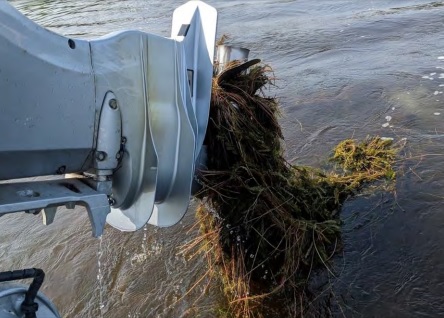
Recent research from Lake George, New York, has added a new dimension to the conversation. Scientists studying a ProcellaCOR treatment found evidence of herbicide compounds persisting in lake sediments months after application, raising questions about long-term environmental impacts and sediment interactions.
As lake associations and resource managers evaluate the best approaches for invasive plant control, understanding both the benefits and potential tradeoffs of available management tools is becoming increasingly important.
We’ve taken a closer look at the study findings, what they mean for lake managers, and how they fit into broader Eurasian watermilfoil management strategies.
Smarter Solutions for Controlling Milfoil

For years, Northern Wisconsin lakes have spent hundreds of thousands of dollars trying to control Eurasian water milfoil with herbicides. The Lower Eagle River Chain of Lakes Commission, formed in 2007, is a prime example.
After a decade of chemical treatments costing up to $250,000 per year, the Commission stopped using herbicides. Within a few years, the milfoil population began rebounding. Manual removal is expensive — around $2,500 per day — and never fully effective.

An aquatic ecologist and others recommend a management-focused approach: targeting plants that interfere with navigation and recreation rather than trying to eradicate the entire population. Mechanical harvesting efficiently manages growth, maintains recreational access, and avoids repeated herbicide costs.
Spending hundreds of thousands on eradication is costly and temporary. Strategic, long-term management is the sustainable way forward for our lakes.

