Blog Archives
New Research Raises Questions About Milfoil Management
Eurasian watermilfoil remains one of the most challenging invasive aquatic plants facing lake managers today. While a variety of control methods are available, herbicide treatments continue to be a widely used tool for managing large infestations.
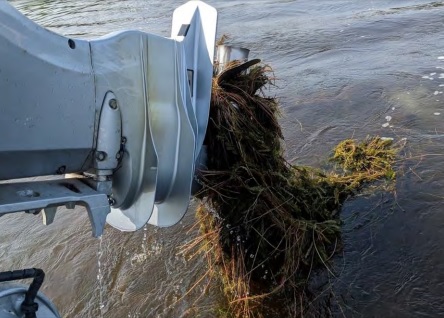
Recent research from Lake George, New York, has added a new dimension to the conversation. Scientists studying a ProcellaCOR treatment found evidence of herbicide compounds persisting in lake sediments months after application, raising questions about long-term environmental impacts and sediment interactions.
As lake associations and resource managers evaluate the best approaches for invasive plant control, understanding both the benefits and potential tradeoffs of available management tools is becoming increasingly important.
We’ve taken a closer look at the study findings, what they mean for lake managers, and how they fit into broader Eurasian watermilfoil management strategies.
Invasive Weeds and Herbicides Are Threatening Fish in Flint Lake
Flint Lake in Valparaiso, Indiana, is struggling with invasive Eurasian milfoil — a fast-spreading aquatic weed that’s clogging waterways and harming fish populations. While herbicides are often used to control the problem, they can create oxygen-depleting decay zones and destroy vital native plants that young fish rely on for shelter and food.
The lake’s challenges highlight the need for smarter, more sustainable management methods that control weeds without compromising aquatic ecosystems.
Read the full article on our website: Invasive Weeds and Herbicides Are Threatening Fish in Flint Lake

 Aquarius Systems