Blog Archives
Smarter Solutions for Controlling Milfoil

For years, Northern Wisconsin lakes have spent hundreds of thousands of dollars trying to control Eurasian water milfoil with herbicides. The Lower Eagle River Chain of Lakes Commission, formed in 2007, is a prime example.
After a decade of chemical treatments costing up to $250,000 per year, the Commission stopped using herbicides. Within a few years, the milfoil population began rebounding. Manual removal is expensive — around $2,500 per day — and never fully effective.

An aquatic ecologist and others recommend a management-focused approach: targeting plants that interfere with navigation and recreation rather than trying to eradicate the entire population. Mechanical harvesting efficiently manages growth, maintains recreational access, and avoids repeated herbicide costs.
Spending hundreds of thousands on eradication is costly and temporary. Strategic, long-term management is the sustainable way forward for our lakes.
Strategic Aquatic Plant Harvesting as a Multi-faceted In-Lake Management Tool
Research on Kohlman Lake in Minnesota shows how mechanical aquatic plant harvesting can play a vital role in improving water quality and supporting balanced lake management.
By selectively removing about 14% of peak plant mass, researchers found that harvesting eliminated 24% of the phosphorus captured by plants—making it a cost-effective method compared to traditional watershed management practices. Beyond improving navigation and recreation, strategic harvesting contributes to healthier, clearer lakes.
Read the full article on our website: Strategic Aquatic Plant Harvesting as a Multi-faceted In-Lake Management Tool

Protecting the Lake
Pewaukee Lake was created in 1838 and has faced decades of aquatic plant management challenges. For years, herbicides were used to control invasive weeds—but in 1985, the Lake Pewaukee Sanitary District discontinued chemicals and expanded its mechanical harvesting program instead.
By removing plants rather than killing them with herbicides, the district has reduced nutrients that fuel regrowth, encouraged native plant diversity, and supported a healthier ecosystem—all while balancing recreation and environmental protection.
Read the full article on our website: Protecting Pewaukee Lake

Mechanical Harvesting an Economical Choice
Aquatic vegetation can hurt water quality, recreation, tourism, property values, and communities financially. Mechanical harvesting may seem expensive upfront, but over a 10–30 year lifetime, it’s highly cost-effective. Harvesters use little fuel, require minimal maintenance, and even have resale value. Properly maintained equipment can last decades, making mechanical harvesting a smart long-term investment.
Read the full article on our website: Mechanical Harvesting an Economical Choice

This 30 year old Aquatic Plant Harvester is still operational and in use.
Advantages of Aquatic Weed Harvesting
Mechanical harvesting of aquatic weeds offers many benefits over chemical control or doing nothing. It provides immediate relief from nuisance plants, improves navigation and recreation, removes excess nutrients like nitrogen and phosphorus, and leaves living plants behind to continue supporting oxygen and habitat. Harvesting also reduces muck buildup, improves fishing access, and creates compostable vegetation for soil enrichment.
Read the full article on our website: Advantages of Aquatic Weed Harvesting

A Success Story – Lake Minnewawa Weed Harvesting
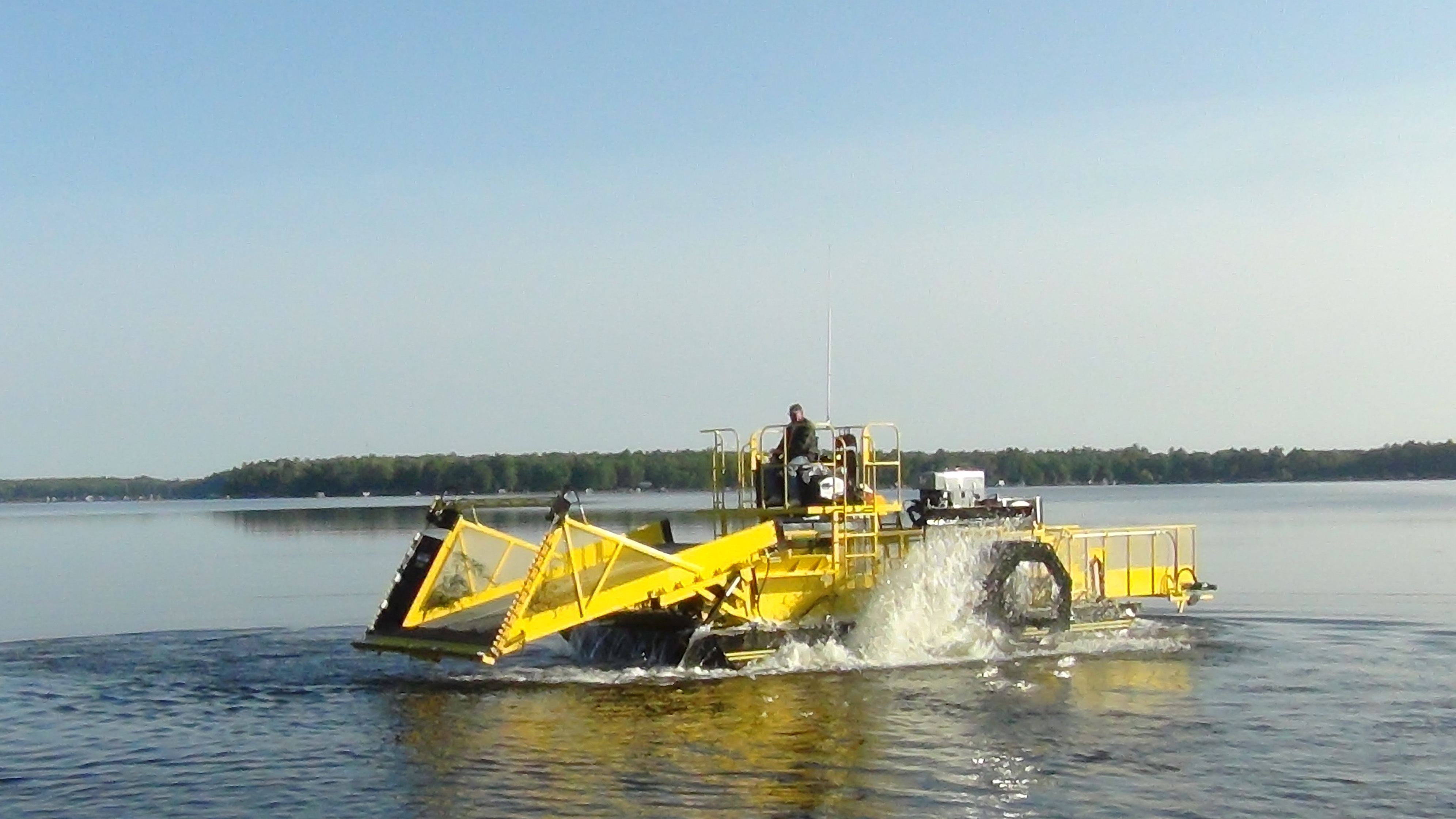
In the 1970s, Lake Minnewawa was overrun with weeds, making boating and water quality a challenge. In response, local residents formed the Save Minnewawa Association and eventually purchased an Aquarius Systems weed harvester.
Operating several months each year, the harvester clears invasive vegetation, improves water clarity, and removes excess phosphorous — reducing algae growth and supporting a healthier ecosystem. The project is funded by memberships, donations, and volunteer work, not state funds, making it a true community effort.
Thanks to years of consistent harvesting, the lake has seen significant improvements in water quality and usability, proving the value of mechanical weed management over chemical alternatives.
Read the full article on our website: Lake Minnewawa Weed Harvesting Success Story
Milfoil — Beating back the invader
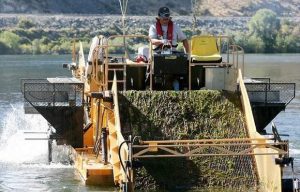
Along the Columbia River, milfoil, an invasive aquatic weed, can make boating and recreation difficult. Park maintenance crews use a milfoil harvester, which cuts and collects the plants, keeping waterways clear and safe for visitors.
Once harvested, the milfoil is taken to compost piles, where it naturally breaks down, providing an eco-friendly solution for managing invasive plants. This method helps maintain the river environment while ensuring parks remain accessible and enjoyable.
What is an Aquatic Weed Harvester?
Aquatic Weed Harvesters provide an environmentally friendly way to manage nuisance vegetation in lakes, ponds, and waterways of all sizes. Acting like an underwater lawn mower, they cut and collect submerged, emergent, and floating plants to keep water clear and usable.
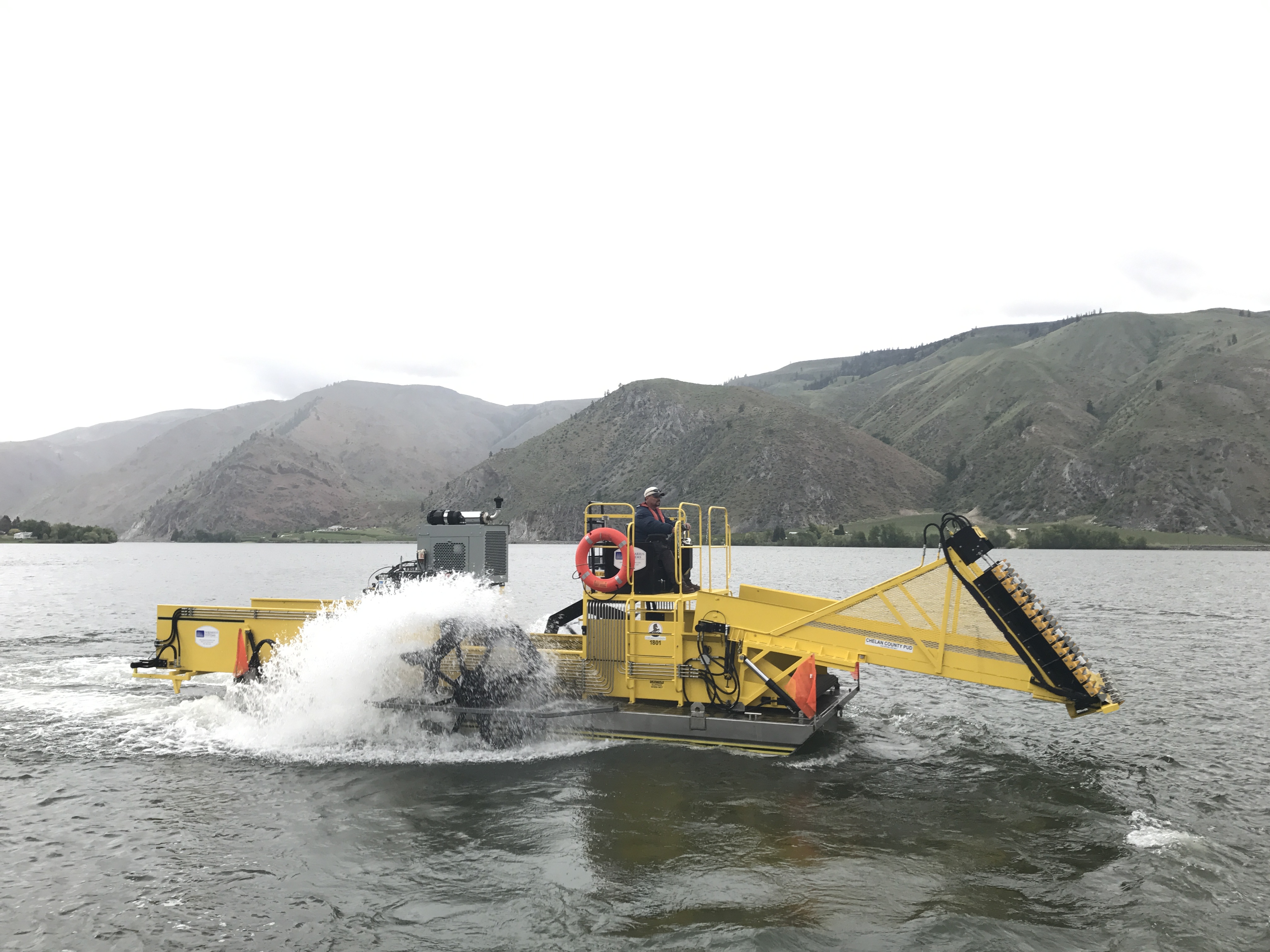
Each machine uses a forward conveyor and cutter bars to remove weeds, storing them on board before offloading at shore. Aquarius Systems offers a range of customizable models to meet specific lake and vegetation needs, helping restore balance to aquatic environments.
Read the full article on our website: What Is an Aquatic Weed Harvester?
DNR “Mows” Dogwood Lake
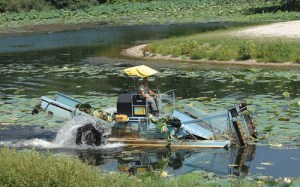
At Indiana’s Glendale Fish and Wildlife Area, DNR staff used an Aquatic Weed Harvester to manage overgrown lotus pads and coontail on Dogwood Lake. This effort helps maintain healthy waterways and ensures better conditions for fishing and recreation.
Aquatic plant harvesting provides an environmentally friendly way to control vegetation growth without chemicals — improving water quality and access for boaters and anglers.
Read the full story on our website: DNR “Mows” Dogwood Lake
 Aquarius Systems